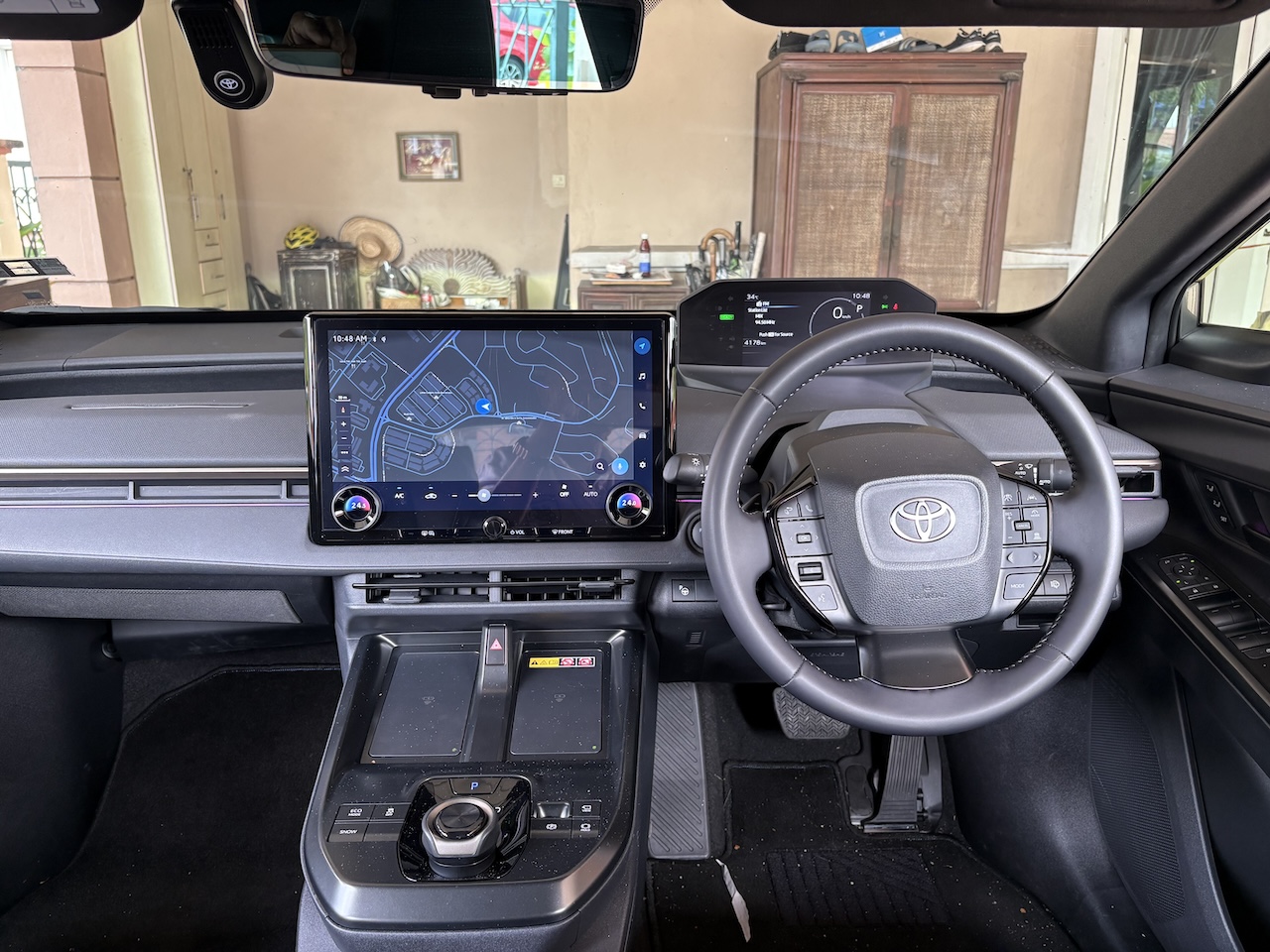
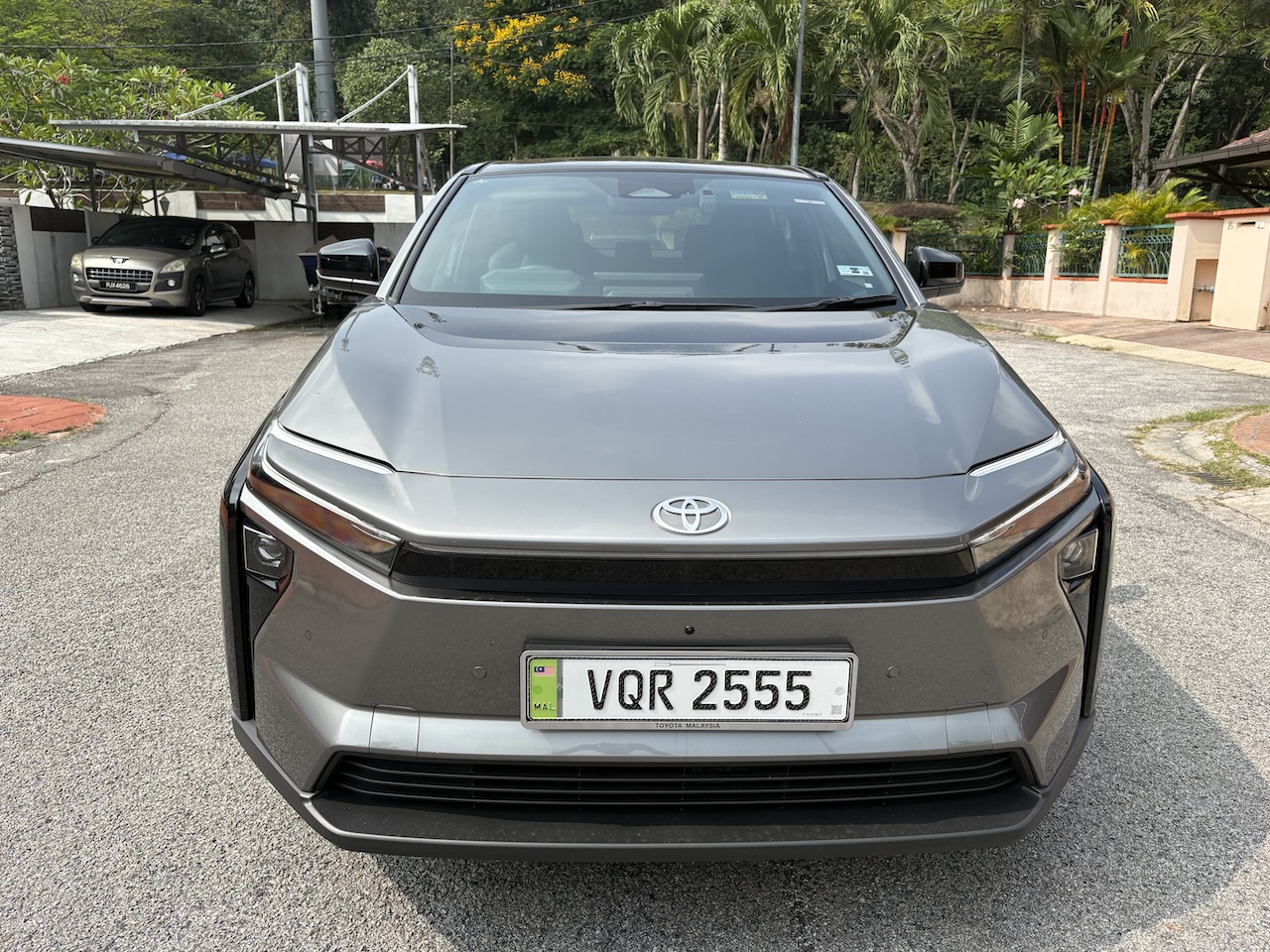
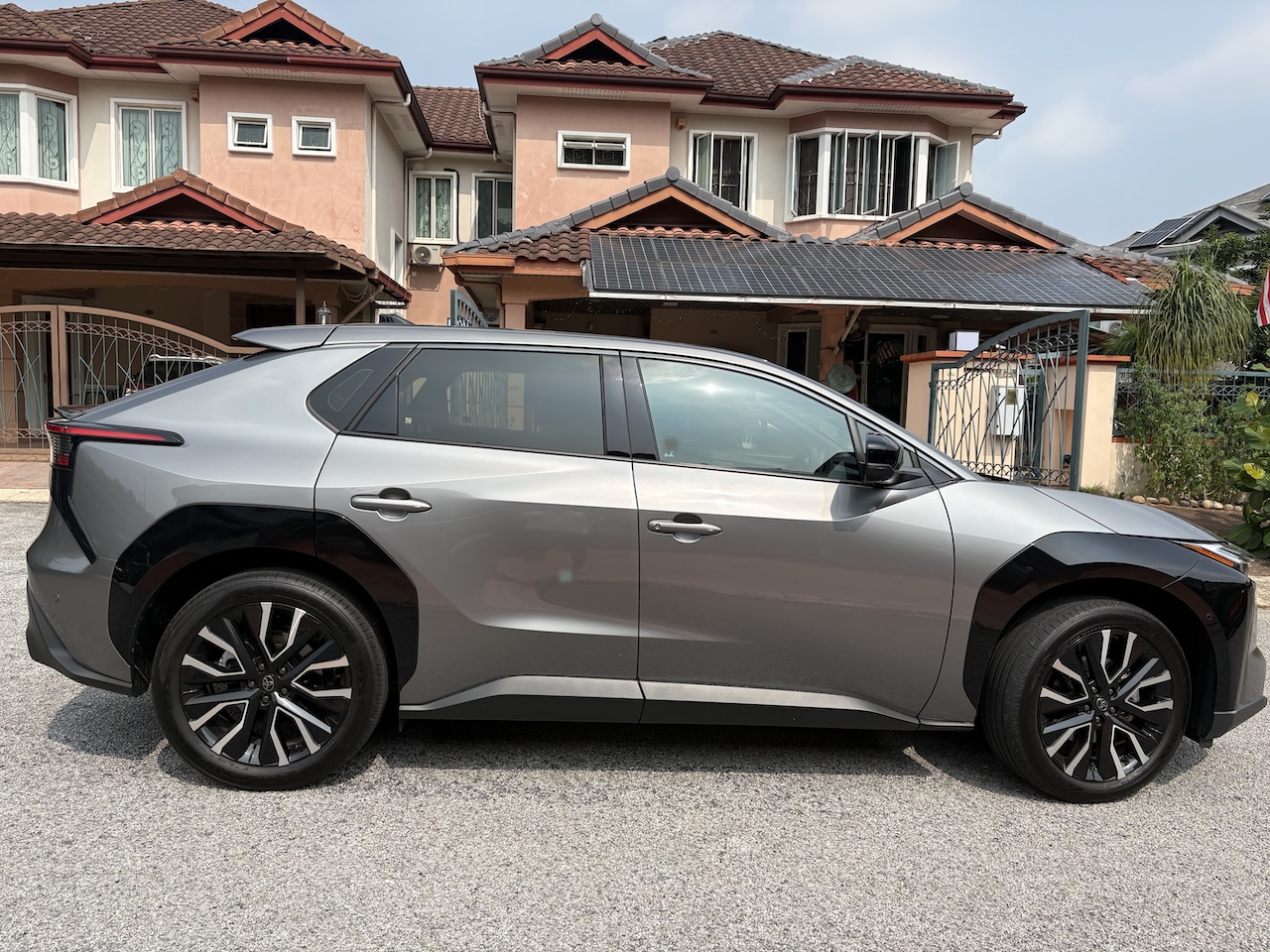
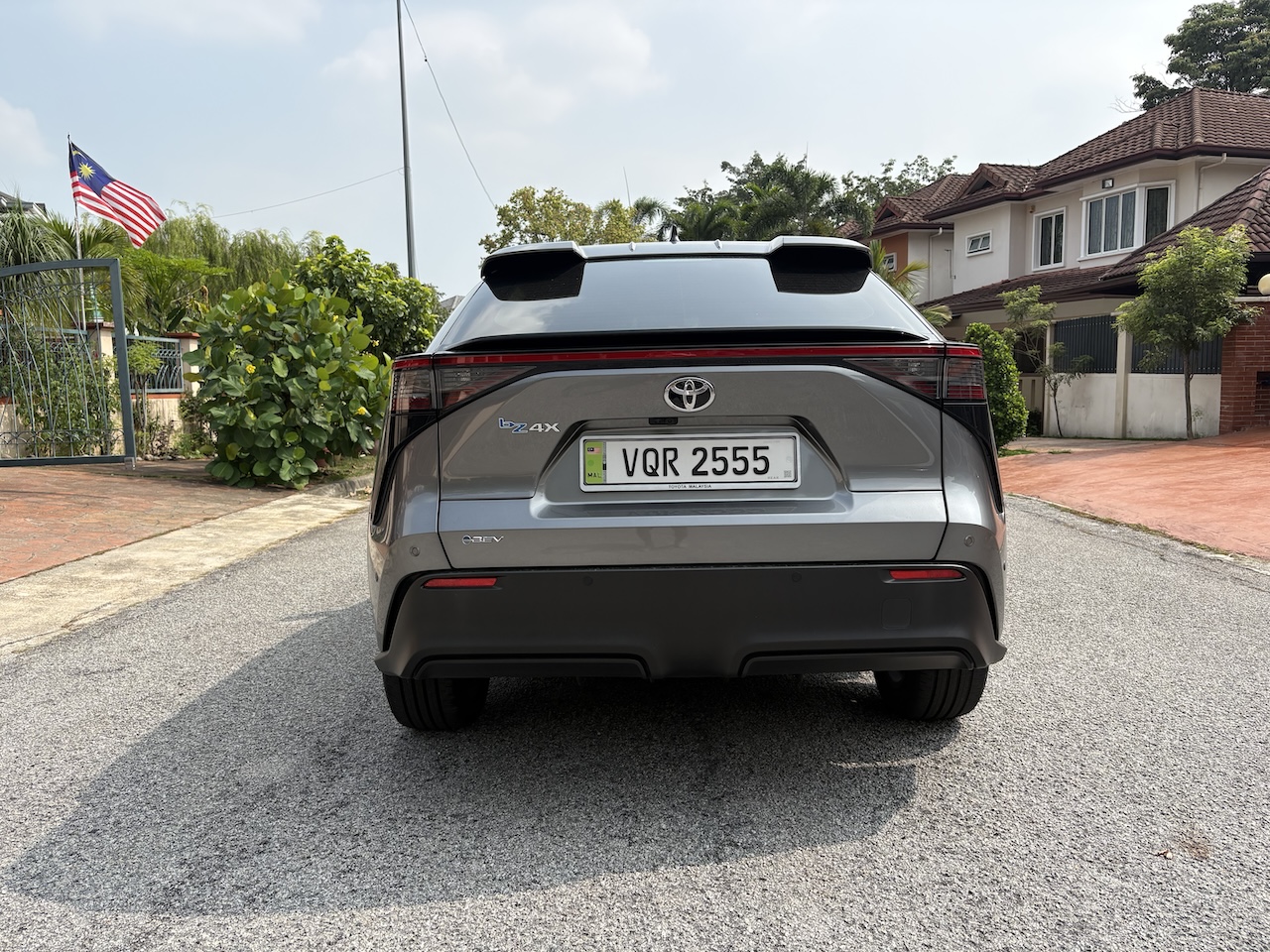
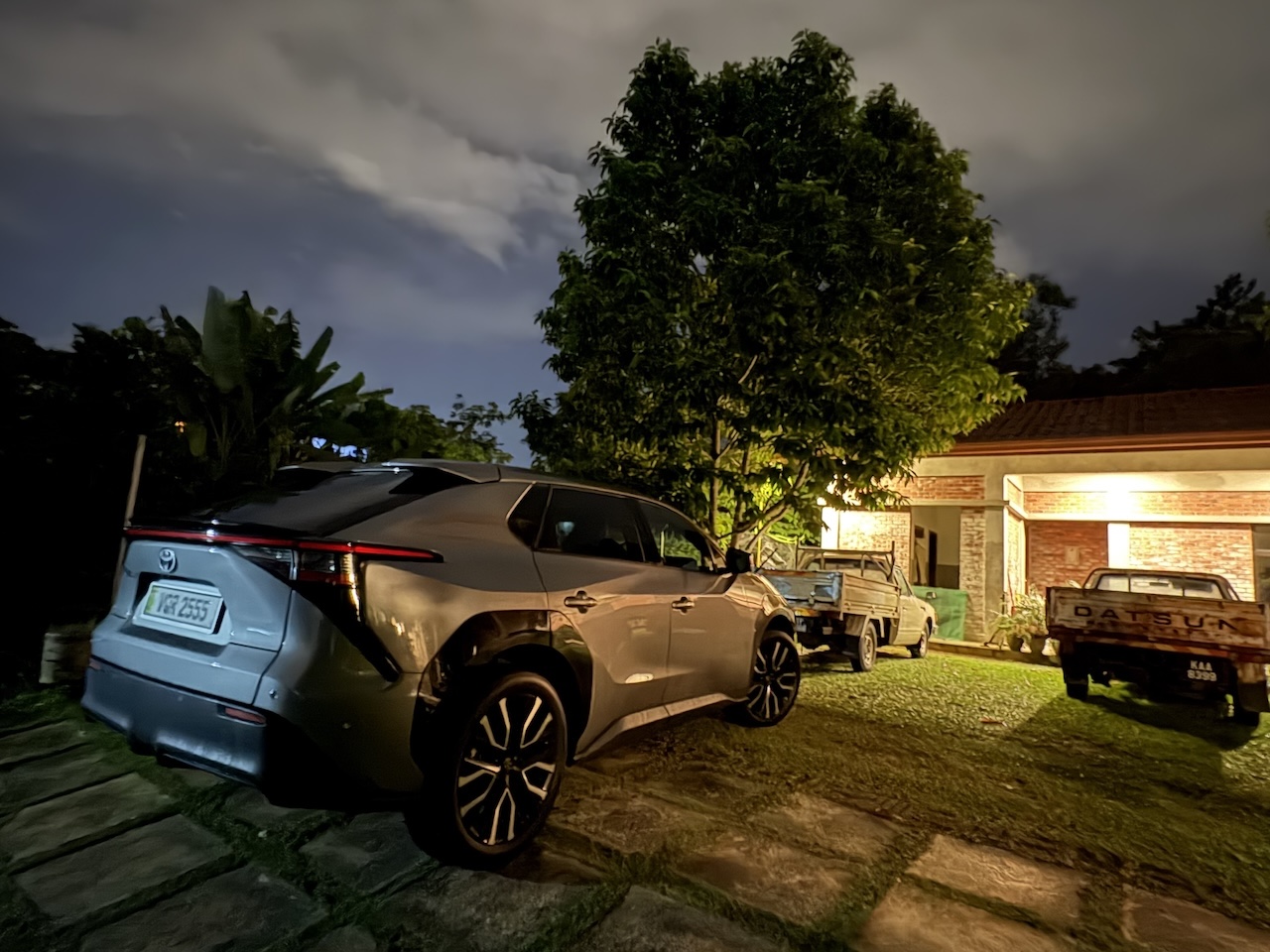
After a 300 km drive in Toyota’s first EV into Malaysia, I came away impressed by its power, ride and handling.
I had been anticipating how Toyota — the company that has spent decades perfecting the combustion engine, automatic transmission and legends like the Corolla and Hilux — would translate all that experience into an electric vehicle.
The answer for Malaysia might just be the bZ4X.
And perhaps the most interesting thing about it is not what Toyota has put into the car, but what it has deliberately chosen not to change.
It will accelerate from zero to 100km/h in a civilised 7.4 seconds. Its range is about 500km.
Those numbers are pathetic compared to Chinese EVs in the same price bracket and doing 0-100 kph in 3.5 seconds. But then again, why compare to Chinese EVs when Toyota’s philosophy is finesse versus brute strength. Think of Detroit’s lumbering V8s compared to the lightweight and nimble Lotus.
And so, after 300km, I found myself appreciating what Toyota has done.
The Chinese EV makers have embraced the electric car as an opportunity to reinvent the automobile. Their cars can feel like spaceships — enormous screens,huge batteries, spectacular acceleration and charging systems capable of putting electricity into the battery at astonishing rates. Intrusive electronics such as access cards with NFC zone at the B pillar.
Toyota has taken another route. It appears to have asked a much simpler question:
How do we make an electric car that a Toyota owner will immediately feel comfortable driving?
That philosophy becomes apparent on the road.
The car is light at 2,020 kg and that’s one of the main reasons why it drives nimbly. And its range of about 500km come from a battery almost 70 percent smaller and lighter than Chinese EVs with almost the same range.
The Chinese approach: give customers more technology, more power, more battery, more range and more features.
Toyota represents something else: take everything your customers already like about your cars and carefully carry those qualities into the electric era.
Which philosophy will win?
I don’t think the answer is as obvious as the specification sheets suggest.
There is a new generation of motorists who will be delighted by an EV that feels like a spaceship. But there are also millions of Toyota owners who don’t necessarily want their next car to feel like a spaceship.
Many of them want to embrace the new technology of EV on condition that it’s a legacy brand that they trust.
And perhaps that is what the bZ4X is really about.
After 300km, I wouldn’t call it the most exciting EV I’ve driven. But I would call it a remarkably coherent Toyota.
The bigger question is when we’ll see more electric models like the RAV4 phev from Toyota. And how will UMW-Toyota manage the Used-Car aspect of Toyota EVs, knowing how Malaysians consider the second hand value of the car before they even buy that car.