
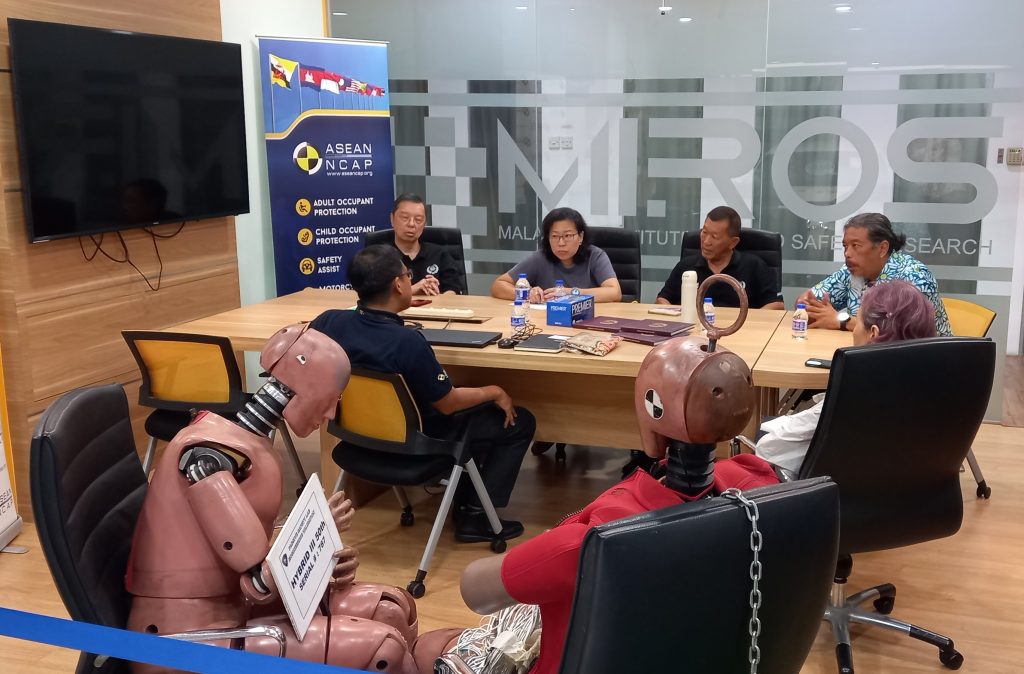
Representatives of the Malaysia Car of the Year (MCOTY) judging panel visited MIROS (Malaysian Institute of Road Safety Research) to gain insights into ASEAN NCAP (New Car Assessment Program), an independent vehicle safety rating program conducted in a collaboration between MIROS and Global NCAP. ASEAN NCAP is one of the regional NCAPs which assesses new models in a specific region, with focus on the conditions typical of the region.
As safety is a major element in the assessment of new models, the MCOTY judges wanted to have a better understanding of the procedures and standards (referred to as protocols) used by ASEAN NCAP when it evaluates vehicles. The evaluations include crash tests at the front and from the sides, simulating real-world collisions. These are conducted in ASEAN NCAP’s own laboratory in Melaka or at the laboratory of an affiliated organisation in Japan, China, Korea and Spain. Vehicles tested overseas are those made in ASEAN factories.
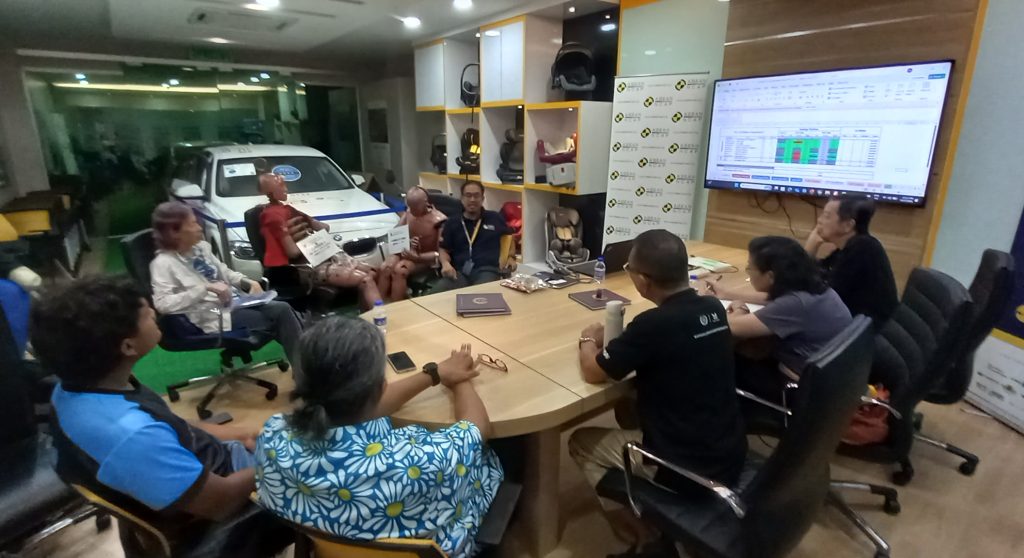
Providing insights and answering questions was Yahaya Ahmad, Technical Leader of ASEAN NCAP, who has been with MIROS since 2008. He explained the method by which the star rating is calculated, taking into consideration four main areas – Adult Occupant Protection, Child Occupant Protection, Safety Assist systems and Motorcyclist Protection. Points scored in these four areas determine the overall score of 0 to 5 stars.
Encik Yahaya said that the protocols formulated by ASEAN NCAP generally follow those of other NCAPs. However, there are certain additional requirements and tests which are given more attention based on the environment or vehicular conditions in a region.
For ASEAN, with a large number of motorcycles and motorcycle accidents, ASEAN NCAP’s protocols emphasise on motorcycle safety and provisions in vehicles to reduce accidents with them. Other NCAP organisations may not have this greater focus as motorcycle accidents may be lower.
Because of the differences in protocols, all the NCAP organisations have agreed to the principle that car manufacturers and their distributors and dealers may not use NCAP ratings from another region for models sold in their region. This means that a model from Europe sold in Malaysia cannot have in its advertisement mention of Euro NCAP star ratings.
Encik Yahaya stressed that only ASEAN NCAP star ratings can be shown in advertisements or other promotional materials. If the model has not been tested by ASEAN NCAP, then no rating will be shown.
The protocols are periodically updated, increasing safety demands and performance. This follows the advancements in technologies and updating of the protocols ensures that consumers benefit from new and more advanced safety technologies as they become available.
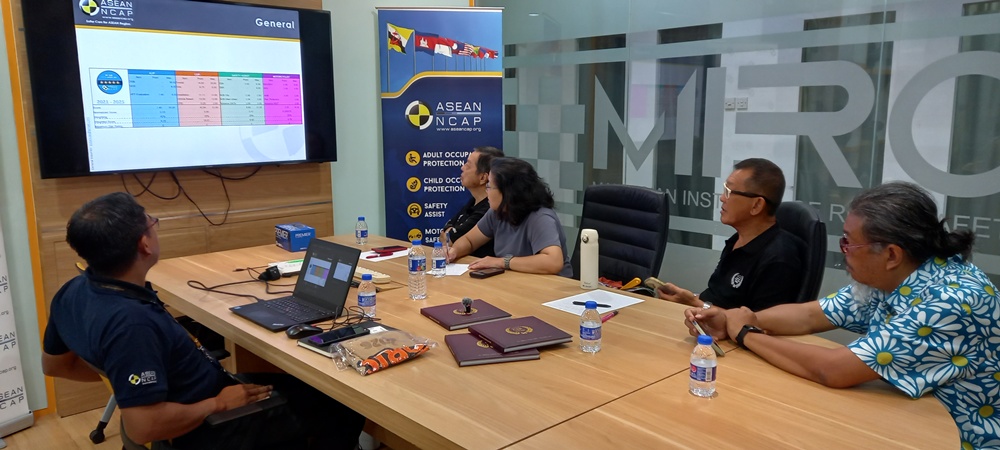
ASEAN NCAP can be credited for raising vehicle safety standards as its protocols have been designed to require the presence of certain safety systems. For example, even if a vehicle’s score qualifies it for 5 stars, if it does not have Electronic Stability Control, it will get no more than 4 stars. In this way, manufacturers have been persuaded to include certain important safety systems as standard.
MCOTY Chairman, Yamin Vong, also sought clarification on the downgrading of the Proton X90 from its original 5 stars at launch to 1 star for the updated 2026 model. According to Encik Yahaya, the change was necessary because the 2026 model did not have the ADAS (Advanced Driver Assistance System) package that had been present in the model tested earlier.
The absence of ADAS meant that the X90 no longer had the safety technologies required for scoring in the Safety Assist category and also the Motorcyclist category. He said that a vehicle’s star rating is restricted if it performs poorly in any single category, ensuring all-round protection. He pointed out the absence of Blind Spot Detection – a vital element in the Motorcyclist category – meant that the score was only 1 star. Consequently, the Proton X90’s overall rating is capped at one-star,” the assessment programme said in its release posted today.
However, Encik Yahaya clarified that for Adult Occupant Protection and Child Occupant Protection, the original 5-star ratings still apply. Only the overall rating ha been changed to 1 star.