
Article by Lisa Kuok
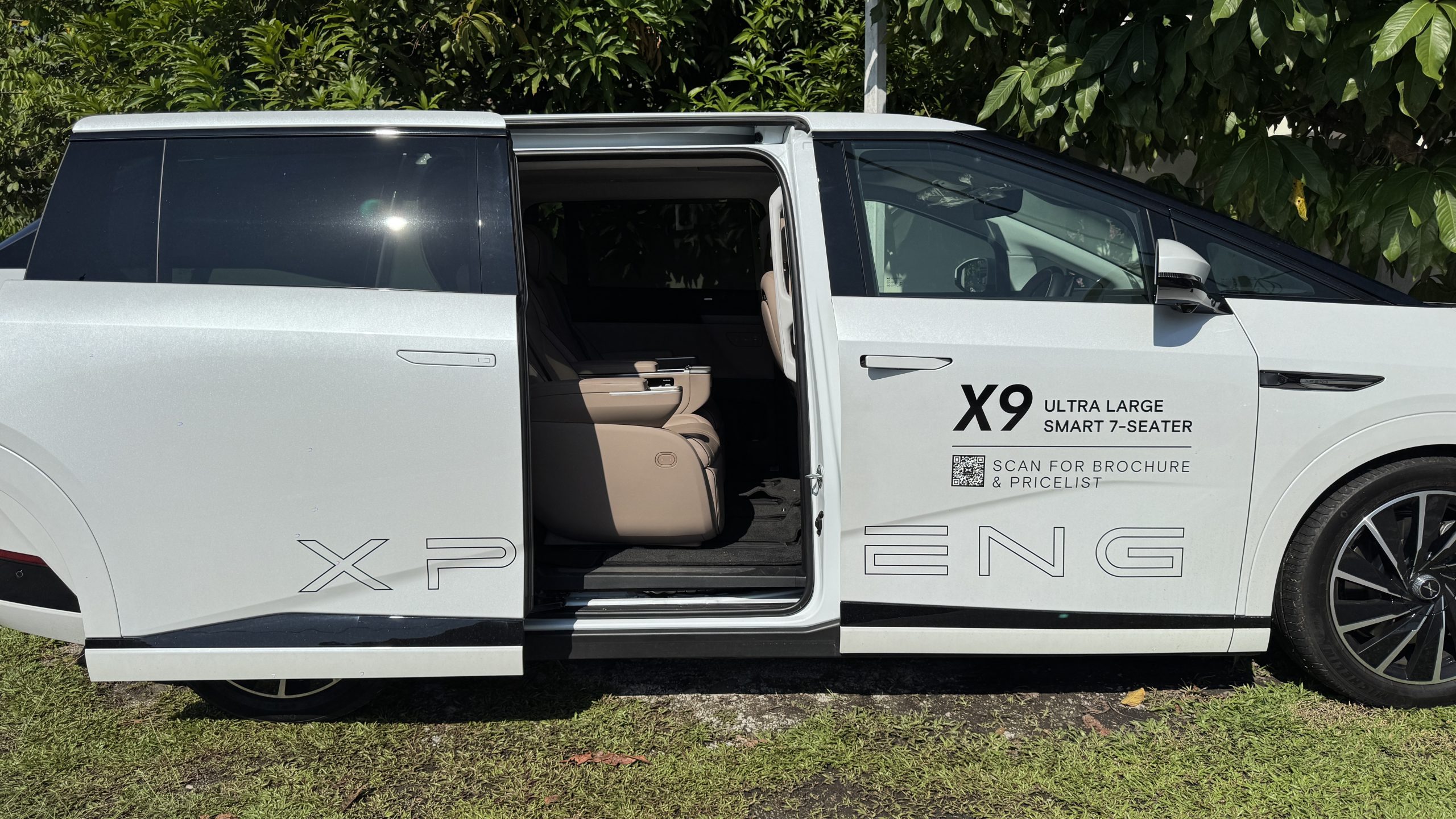
The Xpeng was the least boxy-looking of the three EV Executive MPVs we reviewed. Wedge-shaped front with an angular posterior line, the star-ship inspired Xpeng X9 has an acute rake to both its front and rear windscreens, making it the most unconventional and distinctive new design in the Executive MPV segment in several decades. Designed with optimised aerodynamics from the angles of the windscreens to the design elements on the body and window glass flush to the pillars in order to maximise slip, the X9 boasts a drag coefficient of 0.236 Cd compared to the Zeekr 009 at 0.27. The Denza D9 does not provide any details of its drag coefficient.
The Xpeng X9 is the only Executive MPV without an all-wheel drive option in the Malaysia market. The front-wheel drive X9 has rear-axle steer which gives it a smaller turning circle compared to its peers, making it easier to manoeuvre in tight spaces.
The single motor in the X9 produces 315hp and 450Nm of torque. Zero to 100km/h takes 7.7 seconds. It is the lowest powered of the three but the long range Pro+ variant we had for this review has the longest claimed WLTP range at 590km as a result of its weight advantage from two-wheel drive as well as having more energy dense Nickel Manganese Cobalt batteries compared to the Lithium Iron Phosphate batteries in the Denza D9 and Zeekr 009.

The X9 is built on Xpeng’s Smart Electric Platform Architecture 2.0 (SEPA 2.0) platform with the latest 800V architecture. It has the fastest DC charging rate of the three at 317kW, taking less than 20 minutes to recharge from 10% to 80%. For the superiority of its DC charging speed, the AC charging rate of only 11kW seems a squandered opportunity in terms of efficiency and negates the feasibility of using public AC chargers for any tangible range top-ups. The X9 has the smallest capacity battery at 101.5kWh. For a vehicle of its technological advancement and capabilities, on AC charging, it takes a staggering 11 hours to charge from 5% to 100%.
The AC charging speed for the Zeekr and Denza is also 11kW but their DC charging speeds are 150kW and 166kW respectively. Both have 400V architecture which lowers one’s expectations nevertheless, 11kW is a disappointment for three otherwise sophisticated vehicles, both in terms of technology and style. AC charging from zero to 100% for the 116kWh battery in the 009 is 13.5 hours while the D9 with a smaller capacity 103.36kWh battery takes 10 hours.
Safety-wise, the X9 has six airbags including an extra-long side curtain airbag to protect everyone in the vehicle in the event of a crash. There are also 12 cameras, three milimeter wave radars and 12 ultrasonic radars as well as a sub-meter level high-precision positioning unit and Xpilot Assist 2.5, which is what Xpeng calls its Advanced Driver Assistance System (ADAS) features. The X9 has the capability for supervised autonomous driving. It does not have Head-Up Display which the others are fitted with.
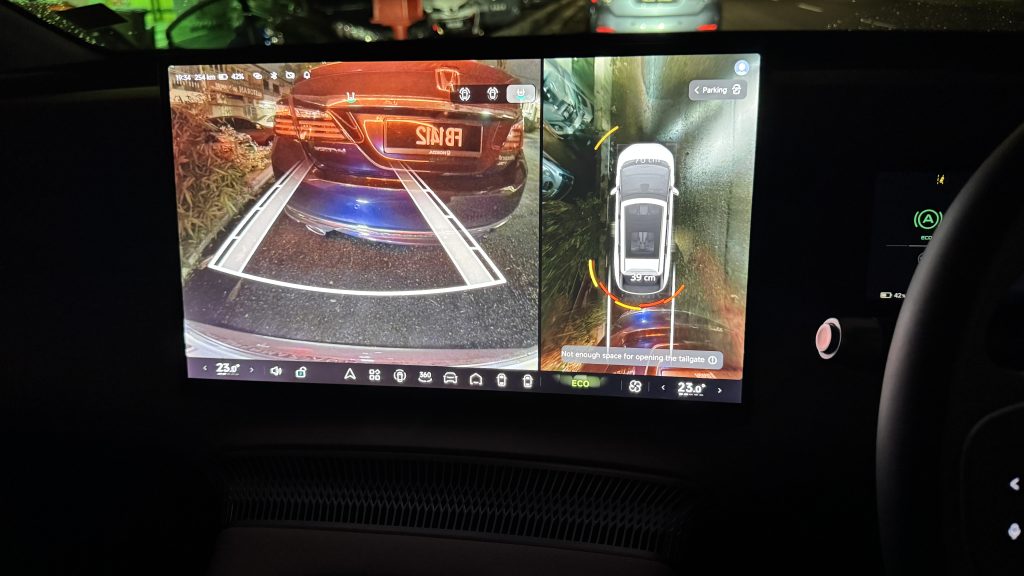
There is a much needed 360º surround view from the cameras to help eliminate the many blind spots especially in front where the wedge-shaped bonnet forms an overhang above the front bumper. Instead of a conventional rear view mirror, there is a rear view monitor with a live feed from the rear camera. Unfortunately, the resolution is lower than that of my vision and also gives a distorted perception of depth: showing objects further away then they actually are. In addition, when the left turn signal is activated, the camera on the left wing mirror streams to the instrument cluster panel. This movement on the panel is visible from the corner of the eye and unnecessarily distracting.
There is a 17.3-inch infotainment monitor in the centre of the dashboard and instrument cluster monitor is 10.25-inches. There is a lack of physical buttons to adjust features like wing mirror angle. In order to adjust the wing mirrors, we had to go through the touchscreen infotainment monitor to locate the function then use buttons on the steering wheel to alter the tilt of the mirrors. Just changing the mirror angle took over 10 minutes before we discovered that the buttons on the left side of the steering wheel adjusted the right hand side mirror and the buttons on the right side adjusted the left hand side mirror.
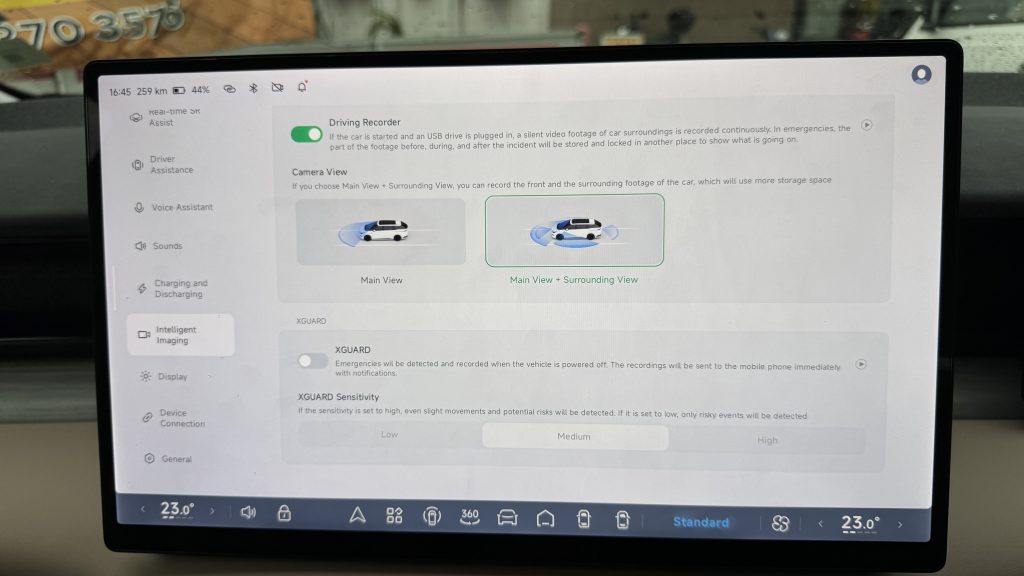
The interface and numerous options to activate, deactivate or customise features in the X9 were many and the multiple menus within menus soon got confusingly and became an unmemorable jumble. However, I soon learnt how to quickly locate the ADAS adjustments as the Lane Keep Assist would reactivate by default every time the MPV was restarted.
With more time and familiarity, an interested owner would soon know what they want and don’t want. There is a customisable dock on the monitor to place most-used features and where they are positioned on the dock for easy access. Most crucially, the interface for air-conditioning fan speed and temperature can be call-up in one step and adjustable with two motions on the screen.

The steering wheel has a pared down design that lacks spokes or other strong immediate visual differentiation between the top and bottom of the steering wheel. This can lead to confusion as to which way to turn the steering wheel to straighten the wheels after doing multiple-turn manoeuvres like parking.

There are speakers embedded in the driver’s headrest which are wonderful for streaming music but very concerting when receiving phone calls.
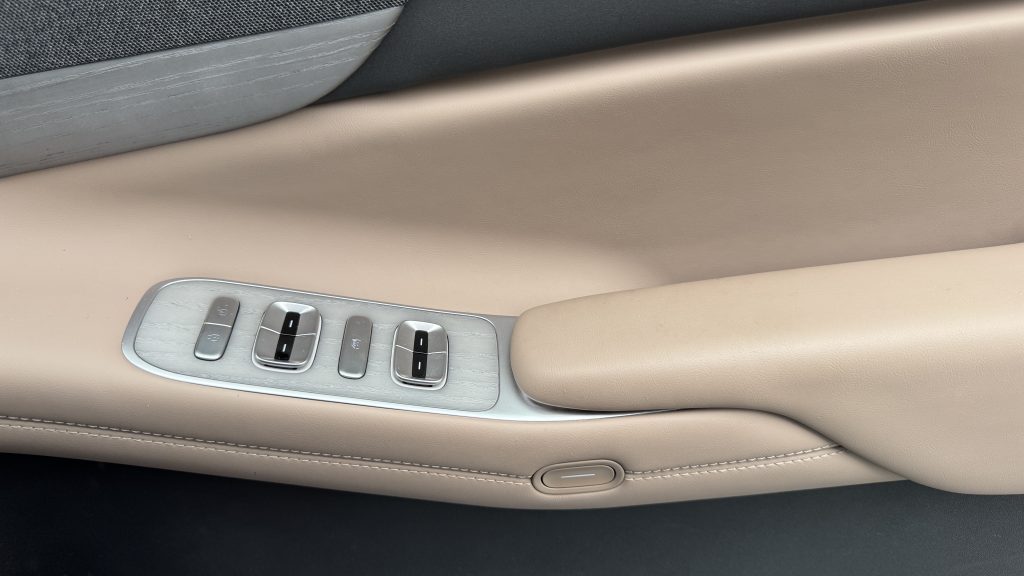
In the cabin, the buttons to open and close the rear sliding doors are placed on the grab pole by the door. Despite being slightly angled inwards, in the line of sight of the second row seat occupant and its proximity to the door, the buttons are not easy to find immediately. Once in the cabin, the lighter coloured beige/brown interior compared to the black and heavily tinted rear of darkness in the Zeekr and the Denza was a pleasant change.
There is a retractable 21.4” smart screen monitor with remote control linked to a 23-speaker XOpera audio system for making video calls on the go or watching movies. The second row zero-gravity seats are wonderfully comfortable. I sat back and availed myself to some of its features: 18-way adjustable leather seats, leg rest, massage and warm ventilation to relax. When I next opened my eyes, we were pulling into a rest stop.


As a passenger, I found the ride quality to be somewhat “floaty” on the highway. Despite the air suspension there was a sensation of bobbing up and down on the highway, as though the damping was not adjusting fast enough to counter the bumps and changes in road conditions at higher speeds. The sensation was less obvious on urban roads and at lower speeds.
As the driver, the X9 was easy to manoeuvre at low speeds and in tight spaces making it unexpectedly nimble in town despite it’s length. At 5293mm, the Xpeng is the longest of the three.
At higher speeds, the floating sensation I felt as a passenger was confirmed when I was driver. The X9 lacked the level of grippy stability of the Zeekr making the X9 a less confident drive on the highway.
I never got to the third row but feedback on the third row seats was that the were very comfortable, legroom was generous even for two almost-six foot men and the ride quality was good. There was also no swaying sensation despite the fact the X9 was being pulled along by its front wheels.
The X9 has the largest boot when all three rows are in use at 755L. This is due to the sunken floor in the boot area. When the third row seats are folded flat the volume increases to 2554L. The D9’s boot volume is 410L when all three rows are in use while the 009’s is 574L.

The Xpeng X9 comes with a mobile phone app for remote access to the car’s status, Advanced Auto Parking Assist and Auto Exit Parking Assist to get the car in and out of a car park. We were not given access to this app which is only intended for the owner of the vehicle.
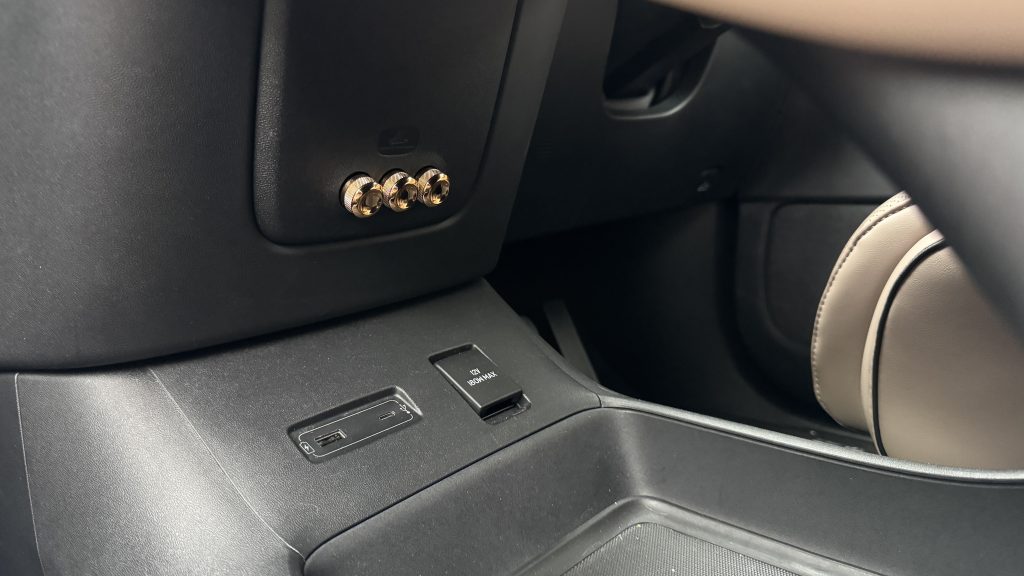
Other comfort features in the X9 include massage and hot and cold ventilation for the driver and front seat passenger, wireless Apple Carplay and Android Auto, voice assistant, five zone climate control, PM2.5 air filter and purification, hot and cold electric fridge, four 50W air-cooled wireless phone charging pads, five USB-C points, one USB-A point and two 12V charging points, many cupholders and V2L charging capability, as well as an Intelligent Fragrance System to waft a selection of up to three fragrances into the cabin for a multi-sensory experience in the X9.